
The cost of manual commission calculations includes significant financial losses from error rates found in 80 percent of organizations, often leading to overpayments or compliance risks. These manual processes also consume ten times more administrative time than automated systems; additionally, they damage employee motivation and trust due to a lack of transparency in the payout process.
For many sales and finance leaders, the end of the month brings a familiar sense of dread. You find yourself buried under a mountain of spreadsheets, frantically cross-referencing CRM data with complex payout formulas while praying that a single broken cell does not lead to a six-figure overpayment. This administrative burden represents far more than just a headache; it is a significant financial leak that drains your organization of both capital and focus. When your top performers spend hours on shadow accounting instead of closing deals, your bottom line suffers a double blow. In this guide, we will quantify the true cost of manual commission tracking. You will learn about the hidden productivity taxes, the legal risks specific to complex labor laws, and exactly how modern automation pays for itself by restoring precision to your sales compensation strategy.
The Financial Leak: Quantifying the Cost of Manual Commission Calculations
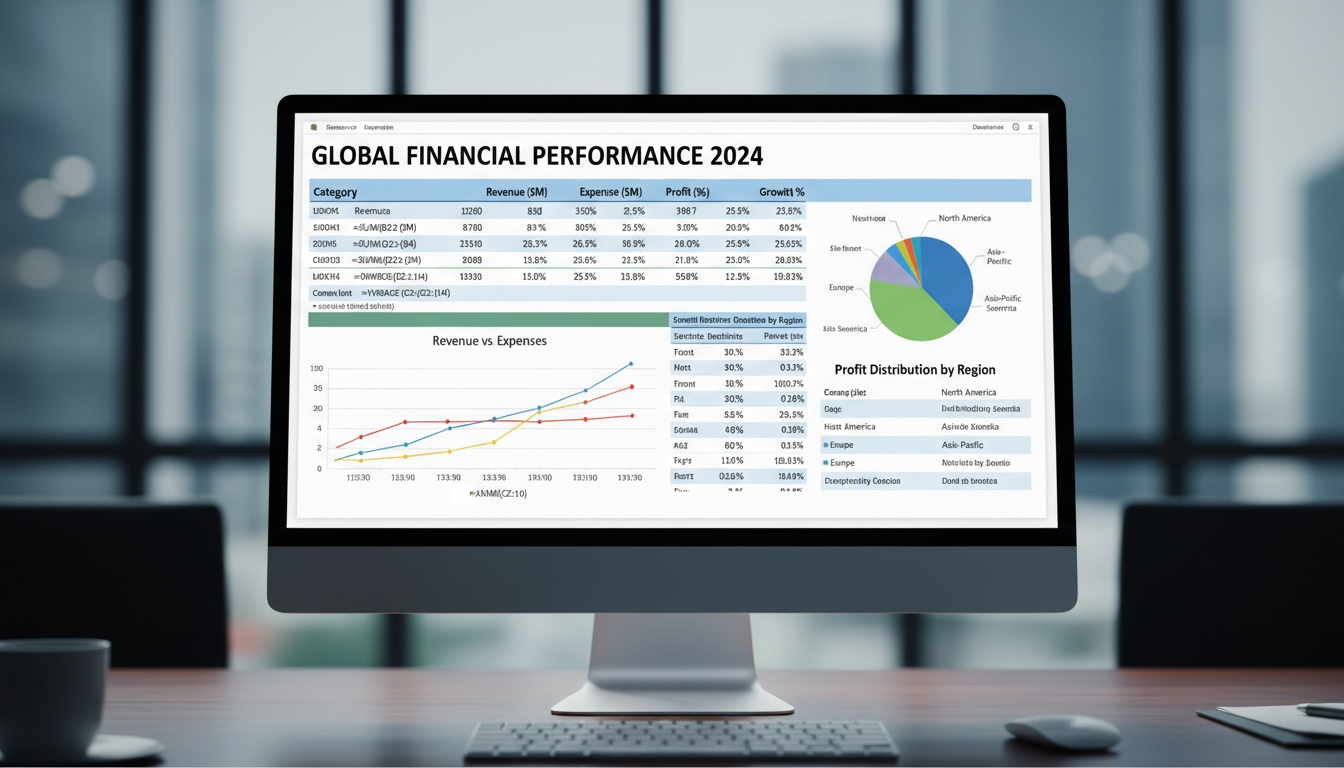
Many finance teams view spreadsheets as a 'free' utility already included in their office suite. In reality, these files often represent the most expensive tool in the technology stack due to the invisible financial drain they create. Research from Ventana Research highlights a sobering reality; 83% of organizations that rely on spreadsheets for incentive compensation management experience frequent errors. These are not merely administrative nuisances; manual inaccuracies can impact up to 10% of an organization’s total commission spend.
Quantifying the cost of manual commission calculations requires a clear distinction between hard and soft costs. Hard costs are the tangible, direct losses to the bottom line, such as overpayments caused by broken formulas or double-counted sales that are rarely recovered. Soft costs are more insidious, encompassing the hundreds of administrative hours finance and sales operations teams spend manually gathering data and validating transactions each month.
From our perspective as an Ashburn, Virginia software leader, we frequently observe these patterns within high-growth tech corridors where complexity quickly outpaces manual capacity. When a company scales, the fragility of a spreadsheet becomes a significant liability. Transitioning to an all-in-one incentive and commission management platform allows businesses to move beyond manual entry. By utilizing advanced modeling and complex calculations, firms can eliminate the margin for human error and reclaim the capital currently leaking through their commission processes.
The Seven Deadly Errors of Spreadsheet Based Commission Tracking
Moving from the high-level financial impact to the granular mechanics of the process reveals exactly where the breakdown occurs. While the aggregate cost of manual commission calculations is significant, the specific points of failure are often rooted in the inherent limitations of static spreadsheets. Modern sales organizations employ multi-dimensional compensation plans that simply exceed the architectural capabilities of a flat file. When finance teams attempt to force complex logic into these tools, seven specific errors typically emerge:
Data Entry Mistakes: Simple human fatigue leads to transposed digits or misplaced decimals, turning a $5,000 commission into $50,000 or $500 instantly.
Rule Errors: Misapplying tiers or accelerators, especially when a single deal pushes a rep into a new bracket mid-month.
Crediting Errors: Difficulty managing complex split-credit scenarios between account executives, sales engineers, and regional managers.
Timing Errors: Recognizing revenue or paying out commissions in the incorrect fiscal period, which often leads to complex accounting restatements.
Double Counting: Failing to de-duplicate entries when data is pulled from multiple CRM reports or billing systems.
Missing Credits: Transactions that fall through the cracks because they do not perfectly match a VLOOKUP criteria or a manual filter.
Formula Logic Failures: Broken cell references or hard-coded numbers that remain in the sheet long after the underlying compensation plan has changed.
Rules-based automation eliminates these risks by replacing manual cell manipulation with a centralized engine. Using an all-in-one incentive and commission management platform, businesses can define their logic once and apply it universally to every transaction. This ensures that advanced modeling and complex calculations remain consistent across thousands of line items. Instead of a finance manager auditing every cell for a potential error, the system acts as a single source of truth, validating data against pre-defined business rules in real time. This shift from manual oversight to automated enforcement is what ultimately seals the financial leaks mentioned previously.
The Shadow Accounting Tax: How Manual Processes Kill Sales Productivity
The hidden cost of manual commission calculations extends beyond the finance department; it reaches directly into the sales floor through a phenomenon known as shadow accounting. When sales representatives lack confidence in the accuracy of a static spreadsheet, they inevitably create their own private tracking systems to verify their pay. This duplication of effort functions as a productivity tax on the entire organization.
Consider the scale of this inefficiency. If a team of 50 reps spends just two hours each month checking math and reconciling records against their personal notes, that results in 100 hours of lost prospecting time every single month. Over a fiscal year, this equates to 1,200 hours that should have been dedicated to revenue generation but were instead wasted on administrative self-defense. This lack of transparency erodes morale and creates a culture of skepticism where reps feel they must audit the company to receive their fair share.
Transitioning to an all-in-one incentive and commission management platform replaces these opaque files with a real-time dashboard. When reps can see their progress and projected payouts through advanced modeling and complex calculations, the incentive for shadow accounting vanishes. Providing this level of visibility ensures the sales team remains focused on high-value activities rather than manual record-keeping.
Compliance Risks and Labor Law Implications for Virginia Businesses

For companies operating in Virginia, the cost of manual commission calculations extends beyond internal friction into the realm of significant legal liability. Under the Virginia Wage Payment Act and federal FLSA guidelines, commissions are legally categorized as wages. This means that errors resulting in underpayments are not merely administrative slips; they are potential labor law violations that can trigger costly state audits, penalties, or even class action lawsuits.
Manual spreadsheets lack the robust audit trails and version control required to survive modern financial scrutiny. In a spreadsheet environment, there is no immutable record to prove exactly why a specific payout was authorized three cycles ago. If a former employee disputes a payment from the previous year, a finance manager is often left hunting through buried email threads or archived file versions to reconstruct the logic used at that time. This lack of transparency makes defending against a wage claim an uphill battle.
Transitioning to an all-in-one incentive and commission management platform solves this by maintaining a comprehensive transaction history record for every single line item. By utilizing advanced modeling and complex calculations, the platform ensures every adjustment and credit is logged with a clear, permanent digital footprint. This level of documentation is essential for maintaining compliance in a complex regulatory environment. If you have concerns about your current audit readiness, contact our Ashburn team to discuss how automated record keeping can mitigate your regulatory risk.
Calculating the ROI: How Automation Pays for Itself
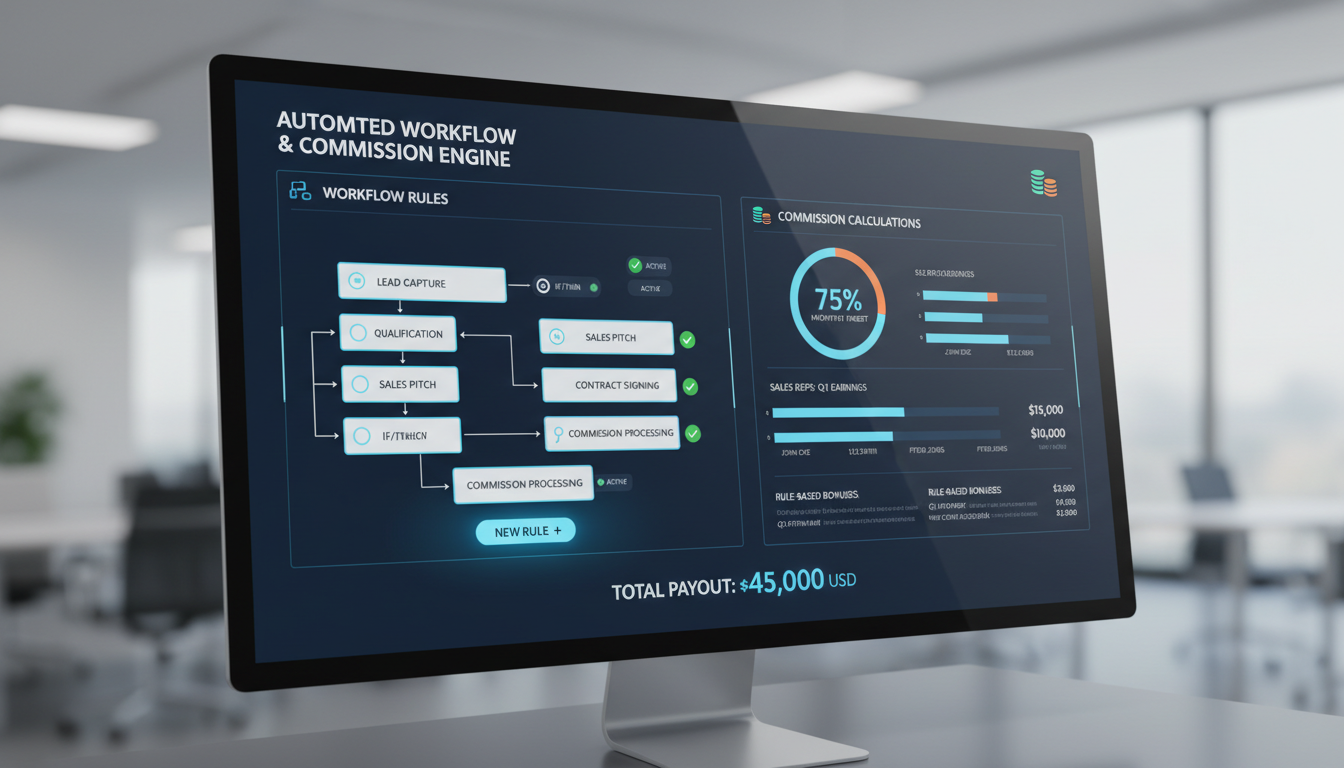
While the risks to compliance are significant, the financial justification for upgrading your systems is rooted in direct ROI. Moving away from a manual setup is not just a defensive play; it is a profit-recovery strategy. To understand the true cost of manual commission calculations, businesses should apply a three-part framework to quantify the savings an automated system captures.
First, consider the direct cost of overpayments. Industry benchmarks suggest that manual systems result in a 3 percent overpayment rate on average. These are funds lost to broken formulas, double-credited deals, or incorrectly applied accelerators that are rarely flagged by the recipient. For a company paying $5 million in annual commissions, this leak accounts for $150,000 in recoverable capital every year. Because manual errors tend to favor the payee (as underpayments are usually contested while overpayments go unnoticed), this is a consistent drain on the bottom line.
Second, calculate the administrative labor burden. Multiply the number of hours your finance and sales operations teams spend on manual data entry, reconciliation, and dispute resolution by their fully burdened hourly rate. In high-growth environments, this often totals hundreds of hours per quarter. This is time that should be spent on strategic financial planning rather than navigating the limitations of a legacy spreadsheet.
Third, factor in the cost of rep turnover. Replacing a top-performing salesperson who leaves due to recurring commission disputes or a lack of transparency typically costs 1.5 to 2 times their annual salary. When an all-in-one incentive and commission management platform restores trust, it protects your most valuable revenue-generating assets from preventable attrition.
By aggregating these three buckets, most organizations find that an automated solution reaches a break-even point within the first few months of implementation. At SalesVista, we utilize advanced modeling and complex calculations to help businesses forecast these specific savings before they transition. This data-driven approach ensures that the shift from spreadsheets to software is a validated financial decision rather than a speculative one.
Common Questions About Commission Structure and Expenses
Finance professionals frequently ask whether sales commissions should be classified as Cost of Goods Sold (COGS) or Operating Expenses (OpEx). Under standard US GAAP practices, commissions are typically categorized as a selling expense within OpEx. However, for SaaS companies following ASC 606, these costs are often capitalized and amortized over the contract life. This nuance is critical when evaluating the cost of manual commission calculations, as accounting misclassifications can distort gross margins and EBITDA reporting.
The complexity of modern plans is best illustrated by the formulas required for tiered structures. A typical calculation might look like this:
`Total Payout = (Tier 1 Sales 5%) + (Tier 2 Sales 8%) + (Tier 3 Sales * 12%)`
While this looks simple on paper, manual math for accelerators is the primary source of error. An accelerator requires the administrator to precisely identify the specific dollar amount that crosses a quota threshold and apply a higher rate only to that marginal revenue. In a spreadsheet, this necessitates nested 'IF' statements that are notoriously difficult to audit and fragile when rows are added or moved. Using an all-in-one incentive and commission management platform automates this logic. By leveraging advanced modeling and complex calculations, businesses ensure that these thresholds are triggered accurately every time, removing the risk of formula drift that defines manual tracking.
Moving away from manual calculations eliminates costly errors and frees your team to focus on growth. While the long-term savings are substantial, the initial shift toward automation can feel like a complex undertaking. If you want expert help designing a system that fits your unique business needs, you can learn more about our philosophy and how we support sales teams. Taking this step ensures your compensation strategy remains accurate, scalable, and rewarding for everyone involved.